
 Deutsch
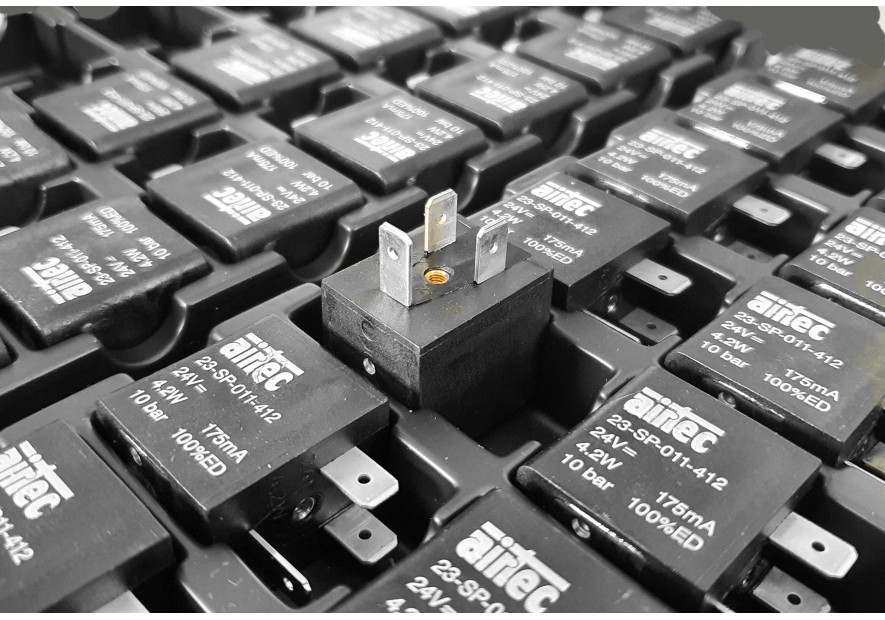

How do I find the right plug for my coil?
1. Valve Connectors in Pneumatics and Their Variants
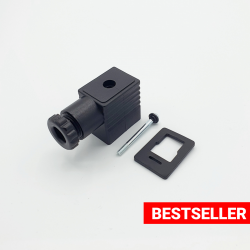
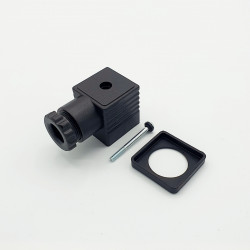
Valve connectors are indispensable components in pneumatic systems, as they establish the electrical connection between the control unit and the solenoid valve. Solenoid valves regulate the airflow that drives pneumatic actuators such as cylinders or grippers. Without valve connectors, the electrical control of these valves would hardly be practical, as they enable a safe, detachable, and standardized connection.
2. Designs and Standards
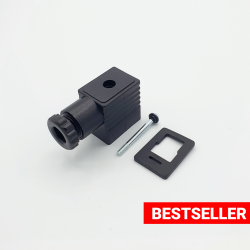
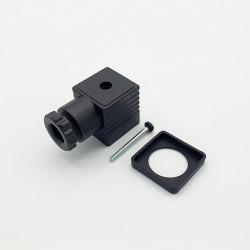
The most common valve connectors are standardized according to DIN EN 175301-803 (formerly DIN 43650), ensuring compatibility. The main types are A, B, and C. Type A is the largest and most frequently used version, typically found on standard solenoid valves. Type B is more compact, ideal for smaller valves, while type C is used for very small or closely spaced valves. This standardization simplifies not only replacement but also the planning and maintenance of pneumatic systems, as connectors from different manufacturers are compatible with each other.
3. Protection Classes, Materials, and Electrical Properties
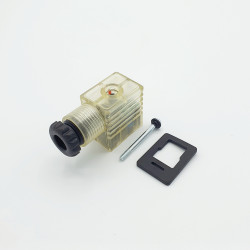
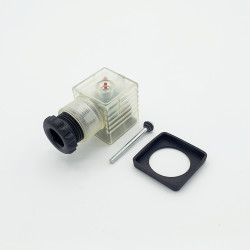
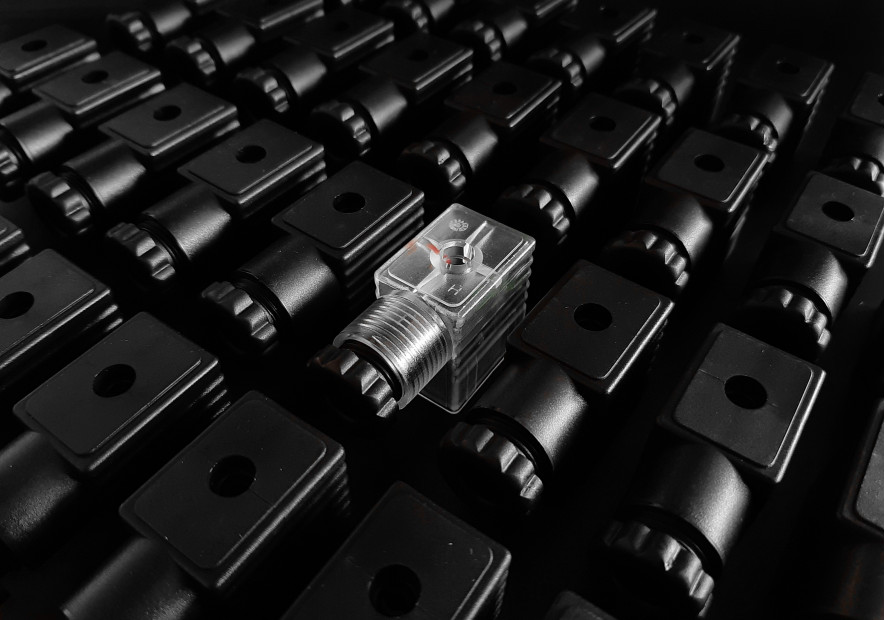
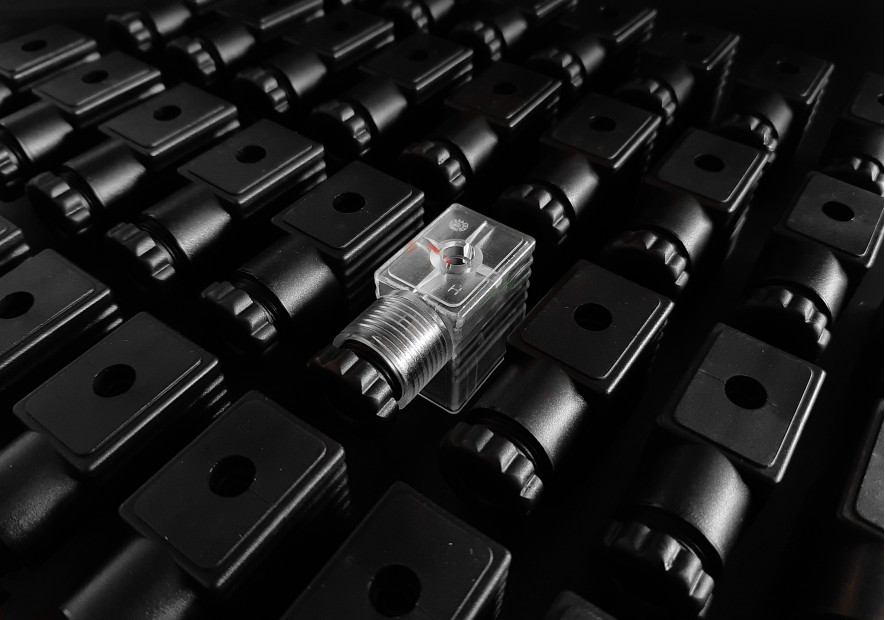
Valve connectors are used in industrial environments that are often exposed to dust, moisture, and mechanical stress. Therefore, they are available in various protection classes – from IP40 for protected indoor areas to IP67, which prevents the ingress of water and dust. The housing is usually made of durable plastic, sometimes transparent to make integrated LED indicators visible.
Electrically, valve connectors are typically rated for voltages up to 250 volts and currents up to 10 amps. The LED indicator is a practical feature that shows the operating status of the valve directly on the connector, significantly simplifying troubleshooting. Modern connectors also include protective circuits such as freewheeling diodes or varistors, which absorb voltage spikes and extend the lifespan of the solenoid coil. Another innovation is connectors with integrated energy reduction, which lower the holding voltage after the initial switching pulse. This saves energy, reduces heat generation, and increases the lifespan of the valves.
4. Selection and Installation
The selection of the appropriate valve connector primarily depends on the valve type, required protection class, and electrical specifications. The wiring type is also important: some connectors come pre-assembled with fixed cables, while others feature terminal connections for flexible on-site installation. For harsh environments, connectors with high protection classes and robust materials are recommended.
Installation is straightforward: the connector is plugged onto the valve and secured with a screw. The electrical connection is made via screw or spring-clamp terminals. Pre-assembled connectors eliminate the need for on-site wiring, saving time and reducing potential errors. In the event of maintenance, the connector can be quickly replaced without having to disassemble the entire valve.
5. Typical Areas of Application
Valve connectors are found in almost every field of automation technology – from packaging machines and conveyor systems to the process industry. They enable flexible and safe control of pneumatic actuators, which is essential for the smooth operation of modern systems.
6. Conclusion
In summary, valve connectors are small but essential components in pneumatic systems. Their standardization ensures compatibility, while various protection classes and additional features such as LED indicators or energy reduction increase reliability and efficiency. Those who choose the appropriate versions benefit from easy installation, quick maintenance, and durable components – key factors for efficient and safe production.